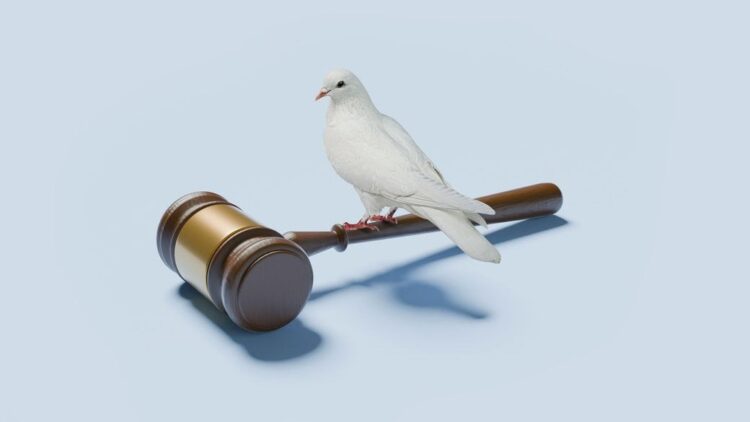
“In order for me to write poetry that isn’t political
I must first listen to the birds
and in order to hear the birds
the warplanes must be silent.”
—Marwan Makhoul
I think it’s reasonable to say that America’s celebration of its 250th year looked a lot different than its 200th in 1976. And America in its 300th year promises to be even more different. What that America will look like depends on what we the people do in these next 50 years. What that America looks like will depend not only on where we focus our attention, but on the company we keep while we’re doing it. I won’t be here to witness the outcome and perhaps, neither will you. But today … we are the ones being called on (and called out) to help build the new foundation … to turn the soil, chop the wood and carry the water in preparation for a new Declaration, not of Independence, but Interdependence. We are the ones … the Silent Generation, Boomers, Xs and Millennials who must support the GenZs and Alphas who will inherit not only our country, but the whole beautiful mess the world has become. It may be an understatement to say that not everyone is optimistic, but there are a growing number, like me, who believe we are mucking our way through to the Tipping Point or Critical Mass; to what the late Joanna Macy called The Great Turning. What a time to be alive! As Joyce Sutphen asks in her poem, “Now That Anything Could Happen”, … what will you do now that you know (anything could happen)? What words will you say, now that you could say anything? What hands will you hold? Whose heart will beat inside you?
Indeed, we shall be known by the company we keep.
As I mentioned in my last post, where we look and how we look at what we see, is important. Today’s offerings are some of what have comforted and inspired me as the summer of America’s 250th unfolds.
Let’s begin with this from Aaron Parnas on June 27th:
Thousands of activists are expected to gather in Washington, D.C., to launch the “Declaration of Interdependence,” an art installation and public pledge outlining the values they believe should shape America’s next 250 years, including economic security, healthcare, safe communities, and environmental protection. Organizers say the effort is nonpartisan and is meant to document what grassroots movements stand for, following listening sessions held across 36 states, Puerto Rico, and El Salvador. The event serves as a counterpoint to the Trump administration’s Freedom 250 celebrations, which organizers argue present a narrower vision of American history and identity. The rally is part of a broader summer of activism that includes voter registration drives, immigration advocacy, protests, and demonstrations focused on voting rights and other political issues.
And this from The Contrarian:
Unexpectedly, Pope Leo was among those articulating the most historically genuine expression of America. In his letter marking America’s Semiquincentennial, Pope Leo XIV emphasized the creedal foundation of our nation: “that defining moment in the history of the United States of America, July 4, 1776, that gave enduring voice to the ideals of liberty, equality, the pursuit of happiness, justice and democratic self-government.” He explained that “among the principles that have guided the development of this country is the God-given dignity of every human life, each person being endowed with an inherent worth that calls for reverence, protection and care.” … For two and a half centuries, generations of Americans have worked together to carry these principles forward — through sacrifice, service, innovation and civic participation. This anniversary stands as an invitation not only to celebrate the nation’s remarkable journey, but also to reflect upon the responsibilities that the sons and daughters of this country bear to one another, and to the generations who will inherit the nation that is being shaped today … Among the most cherished of these principles is religious freedom — the right of every person to worship according to conscience and to practice their faith openly, without coercion or fear. Leo goes on to quote from his recent Encyclical Letter, “Magnifica Humanitas,” in which he wrote about working together for the common good, saying that no one can single handedly bear the weight of the challenges the world is facing. We need one another, and we need to work together in unity to confront the challenges that the world is facing today.
Read it all here, if you’d like.
Then there is Persimmon Tree, an online magazine of the arts by women over sixty, whose editors asked readers to share their thoughts, fears, and aspirations regarding the future and the fate of this small planet, in which the ideals expressed in the Declaration seem to be under assault. Where, they asked them, do you hope—or fear—we are going? Here is an excerpt from one reply.
I rejoiced in 1976, celebrating America’s 200th anniversary on Boston’s Charles River. As the cannons roared to life and church bells rang, the Boston Pops performed Tchaikovsky’s 1812 Overture, with fireworks bursting. The air was buoyant with laughter and singing. People tossed frisbees, played with their kids, and romped with their dogs as American flags waved in the wind. … I’ve lived through many Fourth of July celebrations during turbulent times: the Vietnam War, Watergate, the Iran-Iraq War, and the war in Afghanistan. Politics was often messy, even painful. But I never felt that America’s democracy was in jeopardy … But now, in 2026, it feels different as we prepare to celebrate July 4th …
For more insightful reflections like this one, click here.
My last post shared James Talarico’s Commencement Speech at Paul Quinn College. I don’t know if you saw it or not. But now, if you click on nothing else, PLEASE WATCH Harvard Graduate, Noah Eckstein, deliver the 10-minute Commencement Speech that left everyone speechless.
And what better segue to “Crossing Party Lines,” a game-changing national organization that can actually help people like me (and you) make sense of some (not all but definitely some) of the crazy, but still beautiful, world we live in. When we think about politics, we often imagine opposing sides made up of people who think alike, when actually, research and experience suggest something more complicated; that people who arrive at similar positions often do so for very different reasons. Enter curiosity. My introduction to the Portland branch of the organization and its founder Lisa K. Swallow, came just a couple of weeks ago when Lisa was the guest presenter at my West Hills UU Fellowship in Portland, offering a thought-provoking sermon titled “Curiosity Across Divides.” It was a most enlightening hour. If you’re interested in learning more, check out their amazing website and take a look at ways to get involved, as much or as little as you like. And if you’re local to the Portland, Oregon area, maybe we’ll see each other at one of their monthly conversations.
From Politics to Poetry … why not? Thank you for this, Carolyn Martin.
It Is Important to Understand
Everyone you meet is suffering:
heart breaks, body aches,
the cruel despair of war.Don’t seek answers. Seek better questions
like “Are Adam and Eve still pondering
what all this fuss was for?”Live groundlessly where nothing
can lure you from who you are
or the virtues you’ve yet to glean.Good enough is enough.
Assure a tulip rushing to glory,
it toasts Winter’s thaw with one red cup.Depression can’t exist
in those who create a life
pulsing with unending risks.Merlin’s words to Arthur: “When you
are very sad, the only thing you can do
is go learn something new.”Optimism is magical in a universe
filled with the unceasing hope
that God is coming home to us.Carolyn Martin
(Published in iExile, June 2026)
Spoiler Alert: This next piece is the closing paragraph from Science & Soul’s Substack post of June 29th, leading with: Viktor Frankl, Carl Jung, and Alan Watts All Discovered the Same 5 Rules for Living – Almost Nobody Lives by Them. It goes on to say … A Holocaust survivor, a pioneering psychologist, and a Zen philosopher came from radically different worlds. Yet they all arrived at the same uncomfortable truths about what makes a life worth living. (an interesting companion to Carolyn’s poem.)
The Uncomfortable Truth
People often ask what the secret to a meaningful life is.
Perhaps that’s the wrong question.
The better question is:
What illusion are you still protecting?
Frankl didn’t promise a painless life.
Jung didn’t promise a simple one.
Watts certainly didn’t promise certainty.
Instead, they pointed toward something both harder and more liberating.
Life is not something you conquer.
It is something you participate in.
The tragedy isn’t that life is short.
The tragedy is that many people never truly live it because they’re too busy defending the version of themselves they created years ago.
Every day you delay confronting that truth, the unconscious writes another page of your future.
The question is no longer whether your life will change.
It will.
The only question is whether you’ll choose the change—or wait until life chooses it for you.
The abundance of Goodness and Mercy we find, once we start actively looking for a “few good things” to counteract the atrocities that are regularly shoved in our faces, is amazing. I could go on and on. But I realize your time is limited and so I will close (or almost close) with this lovely film which was made to show the auspicious friendship between the citizens of Rikuzentakata, Japan and Crescent City, California. This is who we are. All just neighbors. This is what we can be. Let us not forget.
And if you’re wondering where to begin … how about this?
Until Next Time, Much Love to All & a candle for the family of Lorenzo Salgado Araujo … and the good people of Houston who are bravely protesting his murder.
Sulima

Buying me an occasional coffee helps me keep these stories coming … and gives me one less reason to cross my fingers when my Social Security payment is due!